3 July 1938
Down Stoke Bank, then a hot bearing at Peterborough
A secret authorised that morning, a descent from Barkston, five miles at 120, a burst before Essendine, and a repair stop that did not stop the publicity.
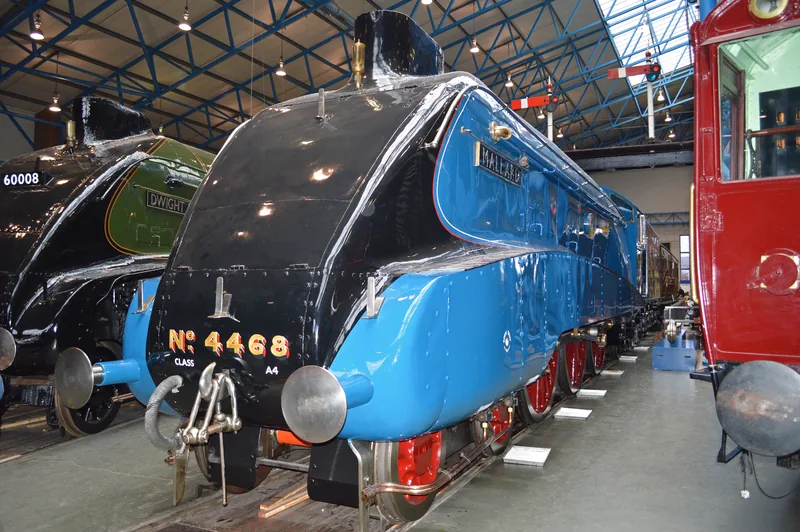
Until that morning, “the recently built Mallard appeared to be just another member of the LNER’s express locomotive.” Gresley “had authorised his team to try and beat the (then) British steam record of 114 mph held by the LMS.” He chose “experienced driver Joe Duddington, alongside fireman Thomas Bray.” “The rest of the crew and technical team were only told the true purpose of the run just before the train’s northbound run from Wood Green, North London.” [source] The 114 mph figure, on this desk, is only the British steam record they set out to beat. It is not promoted into a world record.
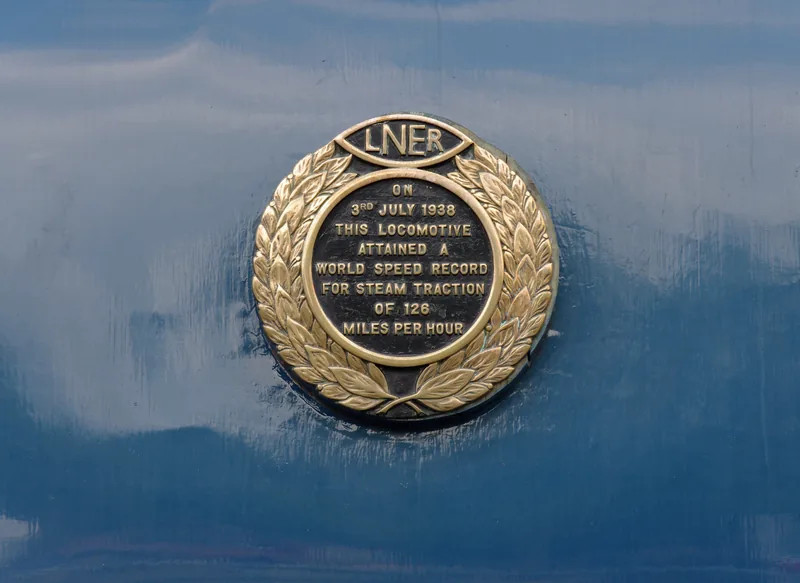
“The attempt on the record started at Barkston near Grantham, which meant the locomotive would be descending Stoke Bank on the record attempt.” Down the bank, “the dynamometer car behind Mallard recorded 120 mph for five miles, which saw off the LMS’s record.” Then came the small window “before the crew needed to slow down for the curve at Essendine,” and the claimed peak of 125 mph, with a later suggested 126. [source] The Science Museum Group copy places the record-breaking speed “at Stoke Bank, between Grantham and Peterborough,” recorded “on paper rolls” by “a travelling laboratory.” It also describes the occasion as “a series of brake tests.” [source] Those official frames — a record attempt authorised that morning, and a series of brake tests — are both kept.
The curve had a cost. “When the train had braked for the curves at Essendine the force exerted had caused Mallard’s big end bearing to run hot, resulting in the locomotive being removed from the train at Peterborough for repair.” The publicity did not go to the shed with the locomotive. “The LNER were masters at press liaison and the speed record still got maximum publicity.” [source] Duddington later spoke to the BBC in 1944; he retired that year. Bray “becoming a driver after the war.” Gresley, the museum notes in parentheses, “died in 1941.” [source]
The saved Science Museum Group page adds two official almosts that never happened. Duddington “believed it was capable of reaching 130 mph.” “It is believed that Gresley planned to make another run in September 1939 in order to reach 130 mph, but the Second World War prevented this attempt.” [source] Those 130s are a driver’s belief and a planned run that did not take place. They are not used here to overwrite the 125, the 126, or the 1903 electric record.
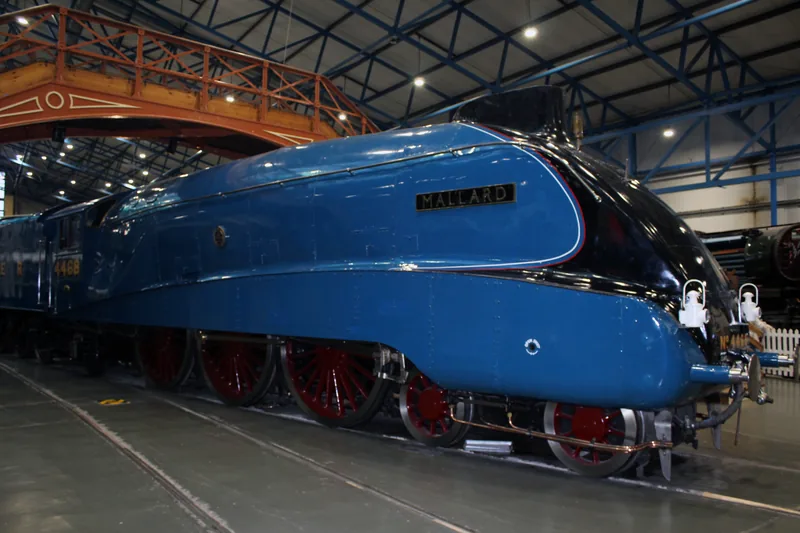
The human side of the official account is short and specific. Gresley chose “experienced driver Joe Duddington, alongside fireman Thomas Bray.” The rest of the crew learned the true purpose only at Wood Green. After the run, Duddington “would later record his recollection of the speed record for the BBC in 1944 showing that the 126mph maximum was a well known claim at the time despite Gresley’s reluctance.” He retired in 1944. Bray “becoming a driver after the war.” The museum notes that Gresley “died in 1941,” so the reluctance and the later well-known claim sit on either side of that official death date. [source] The LNER, meanwhile, “were masters at press liaison.” The bearing ran hot; the publicity did not. That is the official ending of the morning, and it is why a locomotive taken off at Peterborough is still the locomotive in the Great Hall.
A typographic sheet keeps the morning in order: The run of 3 July 1938 (A4) · Letter.
Enjoyed this desk on 125, 126, and a steam record that still stands in its official category?
No pop-ups. No intrusive advertising. Just interesting stuff. A little support helps the next railways.im site get built.