The signature desk
How fast, exactly?
A claimed 125, a later 126, a German steam record, and a faster electric car from 1903. Official wording, not an average.
The signature desk
How fast, exactly?
Four official stories, kept apart: the 125 they claimed, the 126 on the plaque, the German steam record it beat, and the faster electric car that keeps this a steam record only.
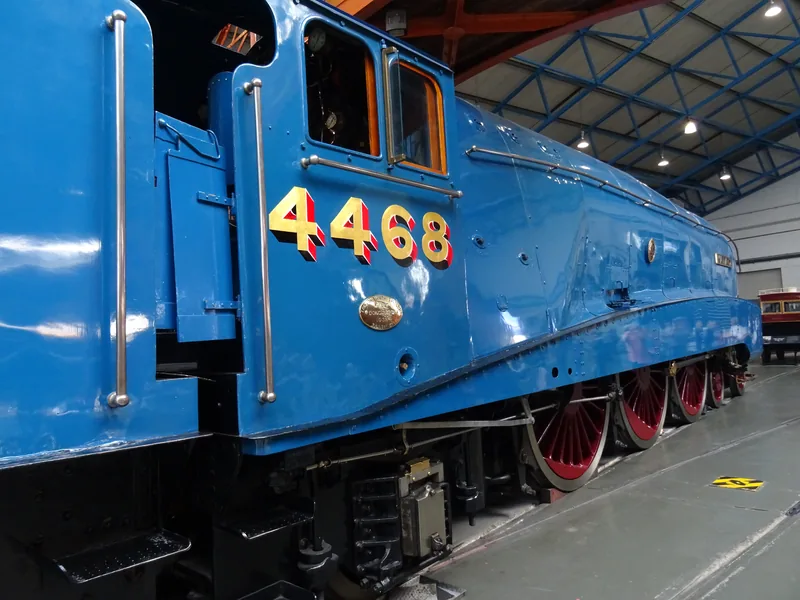
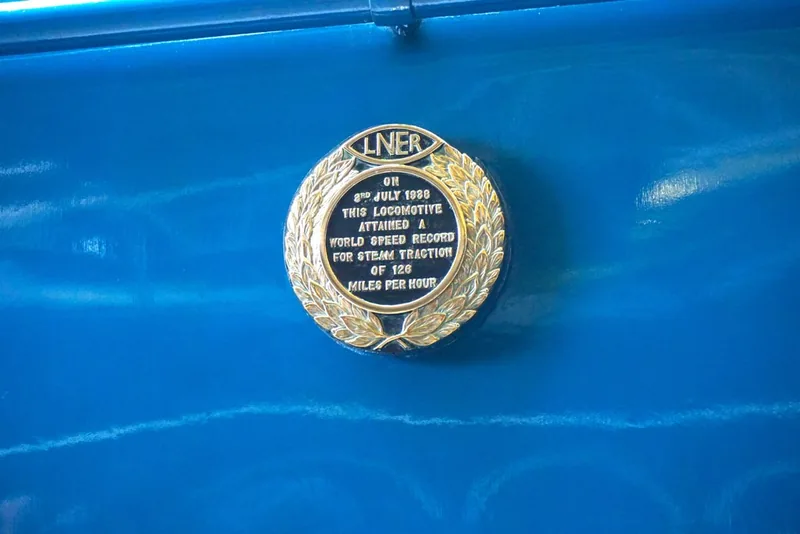
The claimed 125
On the Mallard 75 history, after 120 mph for five miles down Stoke Bank, “there was a small window before the crew needed to slow down for the curve at Essendine, so they accelerated even more reaching a peak speed of 125 mph.” “At the time the claimed 125mph speed had beaten the world record for steam locomotives established in Germany in May 1935 (a top speed of 124.5 mph).” [source] A Science Museum Group page, from a copy saved on 16 November 2026, says “the LNER initiially claimed a speed record for a steam locomotive of 125mph.” [source] The page spelling is left as written in the field notes.
The 126 on the plaque
“Subsequent examination of the dynamometer car record suggested a peak speed of 126 mph, but Gresley declined to mention this as the distance was for less than a mile.” “The plaque on the side of Mallard showing the peak speed as 126 mph was fitted to the locomotive after the war.” The same Mallard 75 page also opens with a later public sentence: on 3 July 1938 Mallard “raced down Stoke Bank at 126mph to set a new steam locomotive world speed record. That record still stands.” [source] The museum’s current star-object page says this “powerful, aerodynamic masterpiece rocketed to 126mph in 1938, a steam speed record that was never surpassed.” [source] Driver Duddington’s 1944 BBC recollection, the museum notes, showed “that the 126mph maximum was a well known claim at the time despite Gresley’s reluctance.” [source]
The German steam record
The claimed 125 mph, the Mallard 75 page says, “had beaten the world record for steam locomotives established in Germany in May 1935 (a top speed of 124.5 mph).” [source] The Science Museum Group copy names the earlier holder: “This beat the record of 124.5mph previously held by German locomotive 05 002.” [source] 05 002 is the Group’s wording, from that saved copy, not a number added from elsewhere.
Not the overall railway record
The Science Museum Group copy is explicit: “the speed record only applies to steam locomotives. The overall speed record for a railway vehicle was held by a German experimental electric railcar which had achieved 130mph in 1903.” [source] “That record still stands,” on the Mallard 75 page, is a steam-locomotive record. The two official frames are kept beside each other, not blended into one championship.
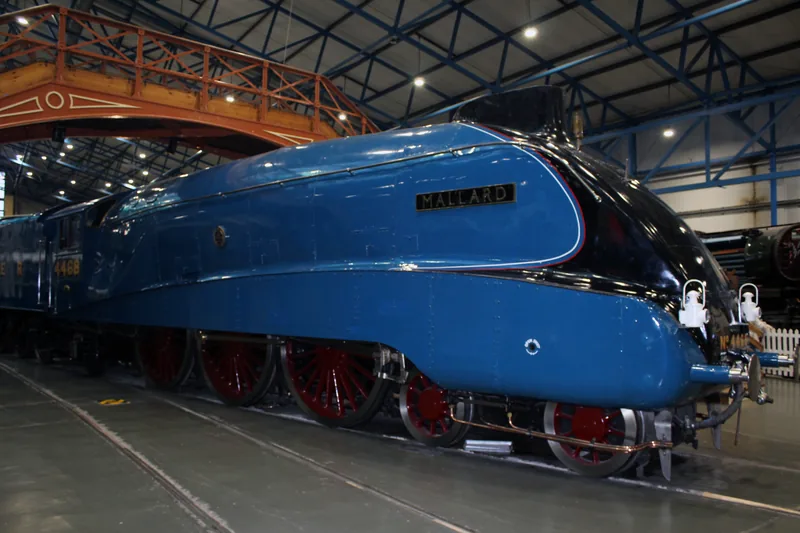
Visitors who meet Mallard in the hall often meet the plaque first, and the plaque says 126. The Mallard 75 page is honest about when that number was bolted on: “fitted to the locomotive after the war.” It is also honest about why Gresley would not use it in 1938: the suggested peak “was for less than a mile.” [source] None of that makes 126 unofficial. It makes 126 a later official figure, sitting beside a claimed 125 that, “at the time,” had already beaten 124.5 mph in Germany.
The Science Museum Group copy, saved on 16 November 2026, tells the same fork in a shorter official paragraph: the LNER claimed 125 mph, a later re-appraisal showed 126 mph “briefly,” and “the speed record only applies to steam locomotives,” because a German experimental electric railcar had already reached 130 mph in 1903. [source] “That record still stands,” on Mallard 75, and “a steam speed record that was never surpassed,” on the star-object page, are steam sentences. [source] [source] They are not used here to outrun an electric car from 1903.
A typographic sheet keeps the four official stories without photographs: How fast, exactly? (A4) · Letter.
Enjoyed this desk on 125, 126, and a steam record that still stands in its official category?
No pop-ups. No intrusive advertising. Just interesting stuff. A little support helps the next railways.im site get built.