mallard.railways.im
125, 126, and a steam record that still stands in its own category
On 3 July 1938 Mallard went down Stoke Bank with a dynamometer car behind it. Official pages still tell that morning in more than one number, and this desk keeps the numbers where the museums left them.
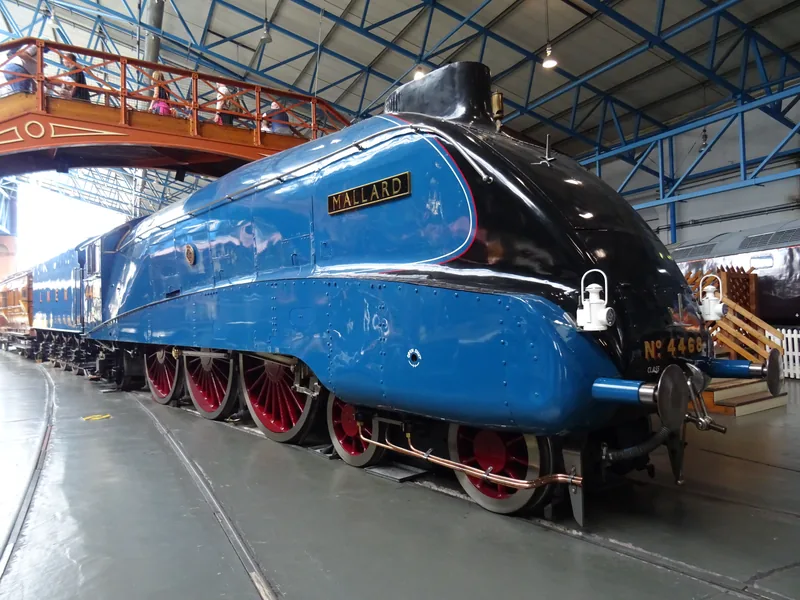
The National Railway Museum’s Mallard 75 history opens with a public sentence that many visitors already know: “On 3 July 1938, the A4 class locomotive Mallard raced down Stoke Bank at 126mph to set a new steam locomotive world speed record. That record still stands.” [source] Further down the same page, the run is told with more gears. The dynamometer car “recorded 120 mph for five miles, which saw off the LMS’s record.” Then, “there was a small window before the crew needed to slow down for the curve at Essendine, so they accelerated even more reaching a peak speed of 125 mph.” “Subsequent examination of the dynamometer car record suggested a peak speed of 126 mph, but Gresley declined to mention this as the distance was for less than a mile.” [source]
Those are not two websites disagreeing. They are two official rhythms on one page: a later public 126, and a contemporary claimed 125 with a later suggested 126 that Gresley would not mention. The museum’s current star-object page chooses the later public figure in a single stroke: this “powerful, aerodynamic masterpiece rocketed to 126mph in 1938, a steam speed record that was never surpassed.” [source] The how fast? desk is where 125, 126, a German steam record of 124.5 mph, and a 1903 electric 130 mph are laid out as neighbours, not as a blend.
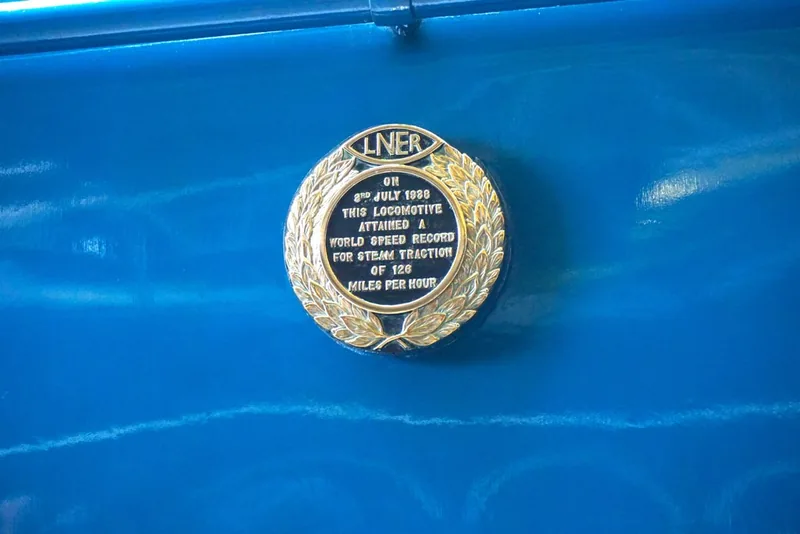
“The plaque on the side of Mallard showing the peak speed as 126 mph was fitted to the locomotive after the war.” [source] Driver Joe Duddington, speaking to the BBC in 1944, showed “that the 126mph maximum was a well known claim at the time despite Gresley’s reluctance.” Gresley had died in 1941. [source] A Science Museum Group page, from a copy saved on 16 November 2026 because the live object page returned 403 on 18 November, says “the LNER initiially claimed” 125 mph, “but later re-appraisal of the original recordings showed the locomotive had briefly achieved 126mph.” [source] The page spelling is left as written when that line is quoted, in the field notes.
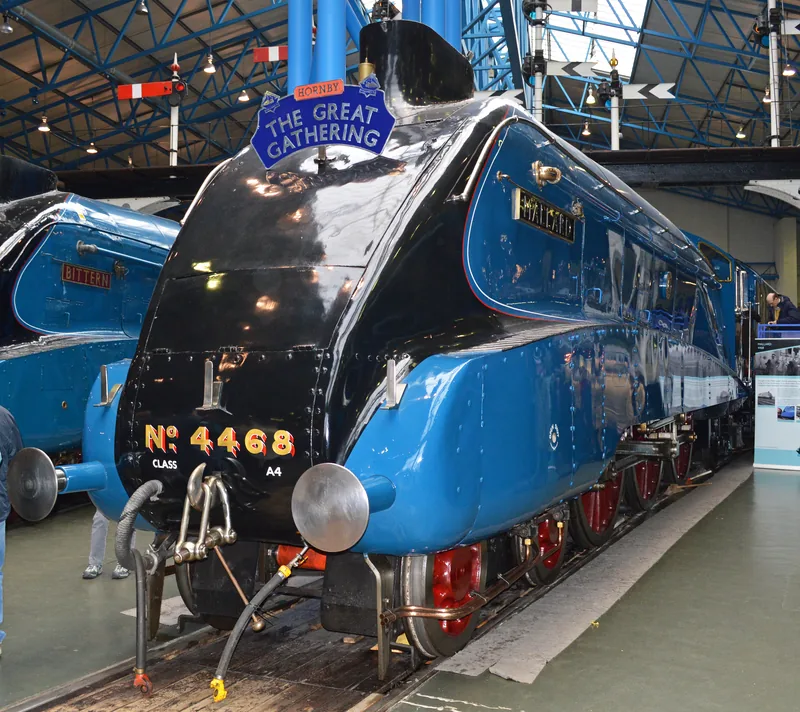
The run itself has a clear official geography. Gresley authorised a bid “to try and beat the (then) British steam record of 114 mph held by the LMS.” He chose “experienced driver Joe Duddington, alongside fireman Thomas Bray.” Most of the crew “were only told the true purpose of the run just before the train’s northbound run from Wood Green, North London.” The attempt “started at Barkston near Grantham,” so the locomotive “would be descending Stoke Bank.” After the burst before Essendine, braking “caused Mallard’s big end bearing to run hot,” and the locomotive was “removed from the train at Peterborough for repair.” “However the LNER were masters at press liaison and the speed record still got maximum publicity.” [source] That morning is told in full on the run of 3 July 1938.
Mallard was “the 28th of the 35 A4 class of express locomotives designed by Gresley.” The A4s’ “streamlined wedge-shaped design bore no resemblance to the preceeding A3 class (of which Flying Scotsman was an example).” The museum’s official spelling is “preceeding,” and this desk leaves it as written. Speed, it says, “was seen as the ultimate symbol of modernity,” and the class, “aesthetically an example of art deco styling,” cut King’s Cross to Newcastle “to just four hours.” [source] The star-object page adds that their shape “was honed in a wind tunnel.” [source] Sister desks include Flying Scotsman, an A3 on that official comparison, plus the Shinkansen, the London Underground, Isle of Man railways, and model railways.
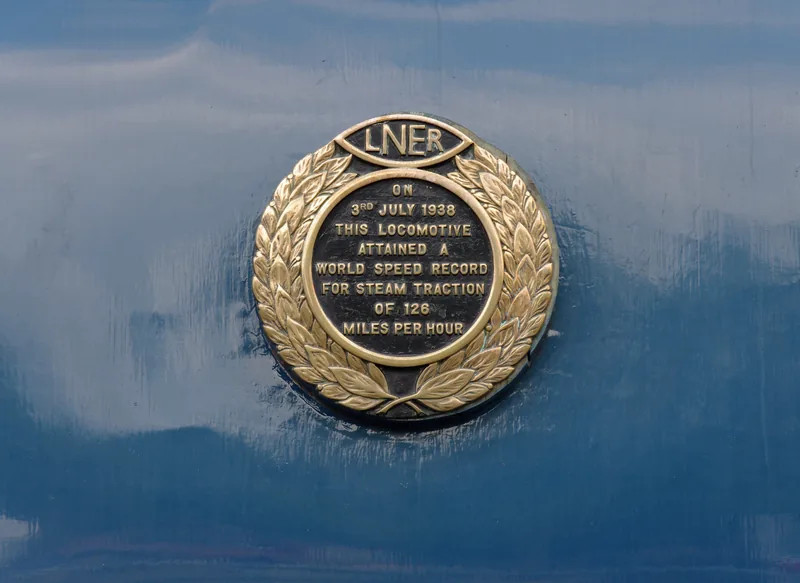
The later official life of the locomotive is almost as densely dated as the morning of the run. It “retired from service in 1963 and was subsequently preserved in 1964 by the British Transport Commission.” It “entered the National Railway Museum’s collection in 1975,” was “restored to working order at York, between 1982 and 1988,” and “completed a limited number of runs until 1989.” It is “now one of only six remaining A4 Pacifics.” In 2013, “to celebrate the 75th anniversary of Mallard’s speed record, all six locomotives were reunited at the National Railway Museum.” [source] Mallard 75, which “closed on 23 February 2014,” marked that anniversary with “spectacular opportunities to see the world’s fastest locomotive united with its five surviving sister A4s.” [source] The museum page keeps those years in order, just as the speed desk keeps 125 and 126 from being stirred into one invented peak.
Enjoyed this desk on 125, 126, and a steam record that still stands in its official category?
No pop-ups. No intrusive advertising. Just interesting stuff. A little support helps the next railways.im site get built.