Discoveries
Things Mallard still does to a first look
A public 126, a claimed 125, a plaque fitted after the war, and a steam record that is not the overall railway record.
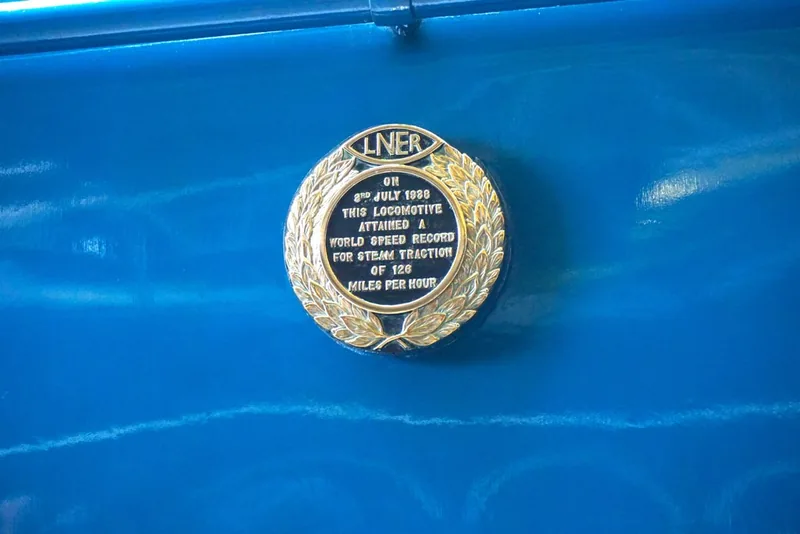
The number on the plaque arrived later
The plaque shows 126 mph, and the museum says it “was fitted to the locomotive after the war.” Gresley “declined to mention” a suggested 126 “as the distance was for less than a mile.” [source] A first look at the plaque is not the whole official story.
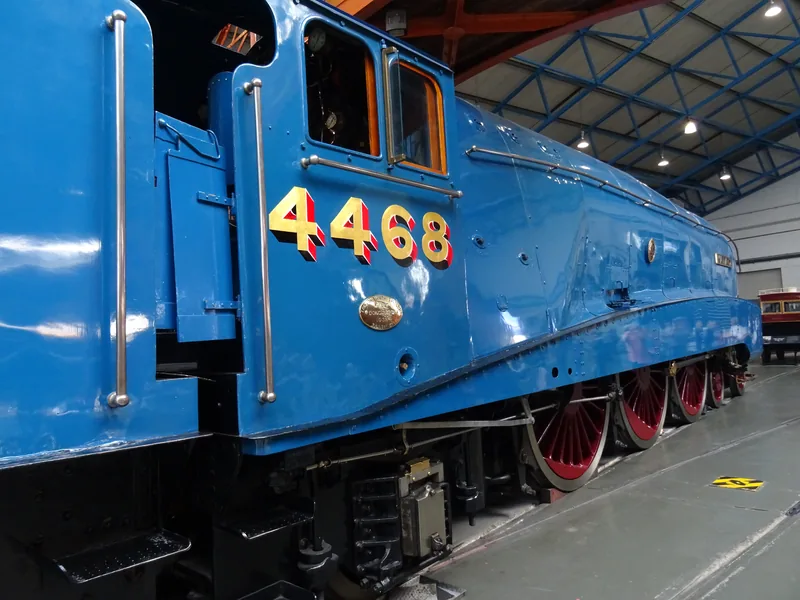
The same official page tells the speed twice
Mallard 75 opens at 126mph on 3 July 1938. Further down, the crew “reaching a peak speed of 125 mph,” then a subsequent examination “suggested a peak speed of 126 mph.” [source] This desk declines to pick a favourite sentence from the same page.
The steam record has a faster neighbour
“The speed record only applies to steam locomotives.” A German experimental electric railcar “had achieved 130mph in 1903.” [source] “That record still stands” is still true, as a steam record.
The headboard is not the record train
Later photographs, outdoors and in close-up, show “The Coronation” on the nose. They are dated 2010 and 2009. They are not used here as pictures of 3 July 1938.
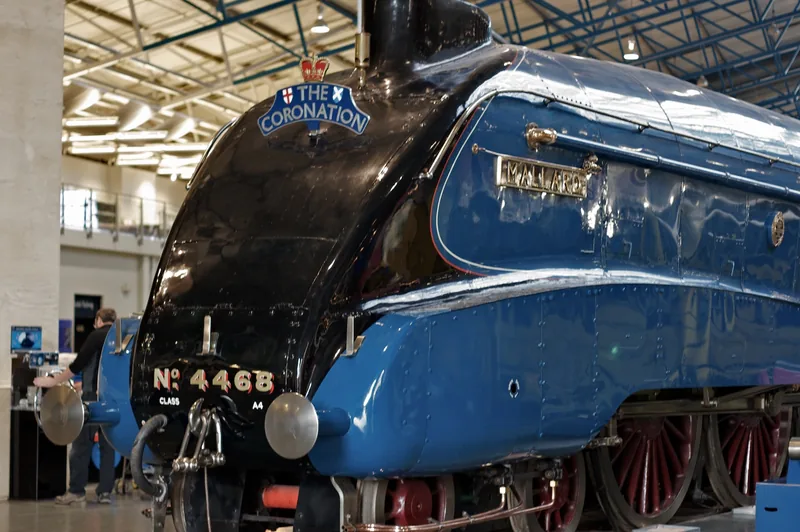
The name came from ducks, officially
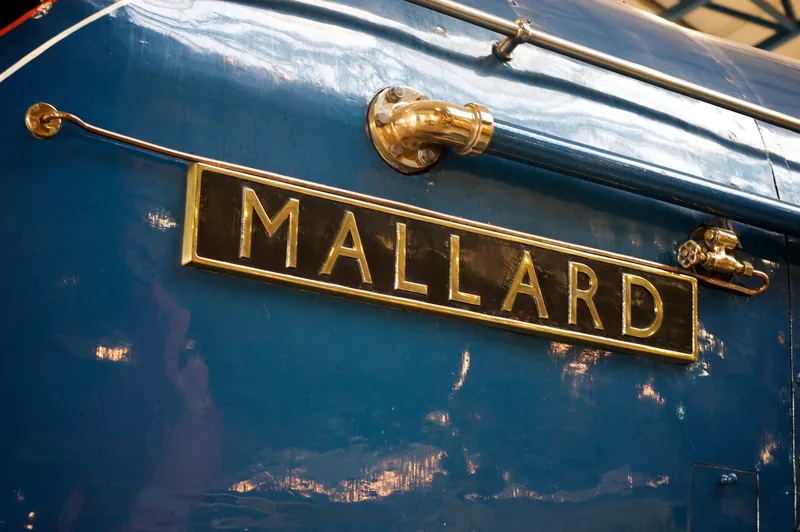
The archived fact sheet, re-opened via a 17 May 2009 snapshot, says “Gresley thought of the name ‘Mallard’ when feeding ducks at Salisbury Hall.” [source] It is an official sentence, not a legend labelled as a legend, and not a story this desk invented to soften the speeds. The same sheet gives a build cost of £8,500, a Doncaster date of 1938, and a locomotive weight of 102 ton 19 cwt. Those figures stay on their own page of the desk, without a kilogram invented beside them.
The crew had names, and later jobs
Gresley chose “experienced driver Joe Duddington, alongside fireman Thomas Bray.” Most of the crew “were only told the true purpose of the run just before the train’s northbound run from Wood Green, North London.” [source] Duddington spoke to the BBC in 1944, retired that year, and left an official reminder that 126 mph was already a well-known claim despite Gresley’s reluctance. Bray became a driver after the war. Gresley died in 1941. Those official dates make the record feel like a human morning, not only a plaque.
Six A4s, then a closed exhibition
The Science Museum Group copy says Mallard “is now one of only six remaining A4 Pacifics,” and that in 2013 “all six locomotives were reunited at the National Railway Museum.” [source] Mallard 75, which “closed on 23 February 2014,” marked the 75th anniversary with “spectacular opportunities to see the world’s fastest locomotive united with its five surviving sister A4s.” [source] The reunion is official. The closed date is official. The locomotive in the Great Hall is still, on the star-object page, “on display.” [source]
Enjoyed this desk on 125, 126, and a steam record that still stands in its official category?
No pop-ups. No intrusive advertising. Just interesting stuff. A little support helps the next railways.im site get built.